Farmland across Clay County, Riley County, Dickinson County, and the Solomon River valley faces a constant challenge with erosion, runoff, and water management. PC Excavating works with landowners and farm operators throughout north-central Kansas to implement NRCS-approved conservation practices that protect topsoil, manage water flow, and qualify properties for federal cost-share programs like EQIP and CSP.
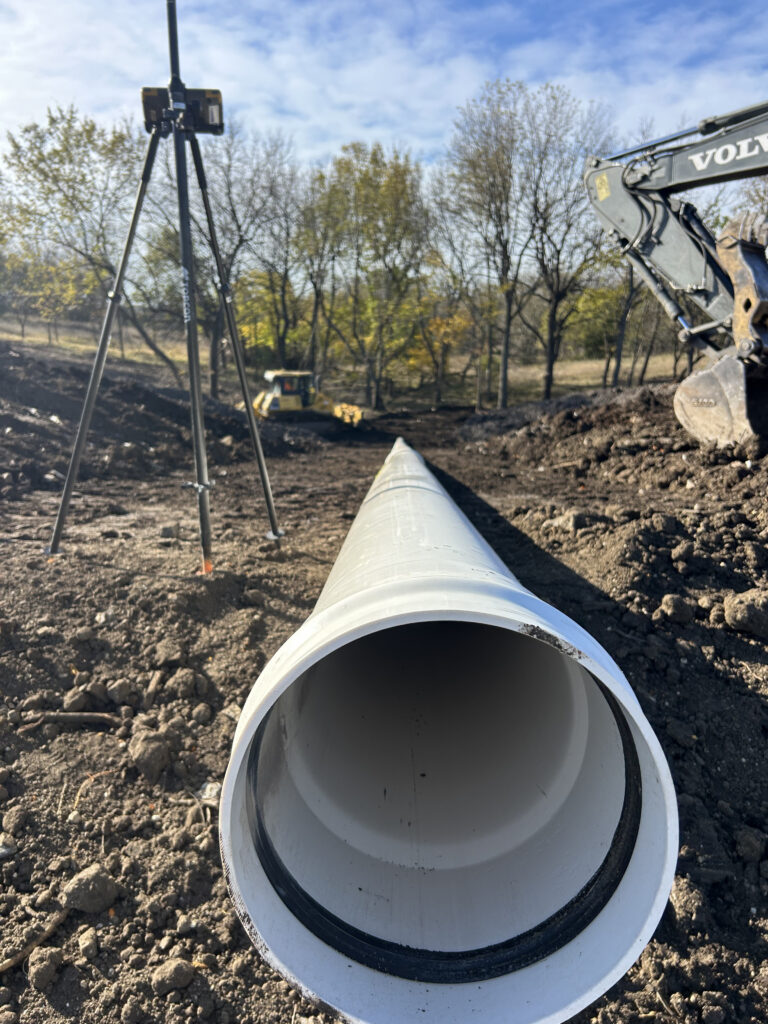
We specialize in terracing, grassed waterway construction, erosion control structures, and agricultural drainage improvements. Our GPS and laser-guided equipment ensures every conservation feature is built to the precise grades that NRCS specifications require — because a terrace that’s off by a few inches won’t protect your land or pass inspection.
Whether your fields sit in the rolling terrain near Manhattan, the cropland east of Salina, the Smoky Hills between Abilene and Concordia, or the Republican River watershed near Belleville and Marysville, our team understands the land and the programs that serve it.
Conservation Practices We Install
Conservation work involves reshaping land to control water flow, reduce erosion, and protect soil productivity. The practices we install are designed to last and perform according to engineering standards — requiring precise grading, careful placement, and construction that follows NRCS guidelines.
We install terracing to reduce slope length and prevent soil loss on sloping fields across Clay, Cloud, Mitchell, and Ottawa counties. We construct grassed waterways that safely channel runoff on fields from Wakefield to Herington. Our erosion control structures — including diversions and berms — protect cropland across the Smoky Hills, and our agricultural drainage improvements address standing water on river bottom fields near the Solomon, Republican, and Little Blue rivers.
Each project is built to the specifications provided by your conservation planner or district technician. When our work connects to broader earthmoving or grading needs on your property, we can coordinate with our land grading and site preparation services to cover both scopes under a single contractor.
Working with Government Conservation Programs
Many of our agricultural customers across north-central Kansas are enrolled in USDA conservation programs that provide cost-share assistance for implementing practices like terraces and waterways. We’re experienced with the documentation, specifications, and inspection processes that EQIP, CSP, and other programs require.
When your conservation plan calls for earthwork, we work directly with you and your local conservation district — whether that’s the North Central Kansas Conservation District serving Clay, Cloud, Ottawa, Republic, and Washington counties, or the offices serving Riley, Geary, Dickinson, and Saline counties. We ensure the project meets program standards and qualifies for payment.
We understand that program timelines can be tight, especially when weather windows are limited across the Kansas growing season. We’ll coordinate our schedule with your planting or harvest plans — whether you’re farming near Chapman and Herington in Dickinson County or operating closer to Concordia in Cloud County — to minimize disruption to your operation.
Precision Technology for Conservation Work
Conservation structures have to be built to precise grades. A terrace that’s off by even a few inches won’t function correctly and may not pass inspection. Waterways need the right slope to move water without causing erosion. Our GPS and laser-guided equipment allows us to achieve these tolerances reliably — which is why conservation districts and landowners from Marysville to Milford trust us with this work.
This technology also speeds up the construction process. We can establish grades faster and more accurately than traditional methods, which matters when you’re working around planting schedules in Riley County or harvest windows in Saline County.
When a conservation project requires material removal or the delivery of fill and aggregate, we can integrate our material and rock hauling services into the same scope — keeping your project moving without the need for additional contractors.
Who We Serve
Our conservation customers include working farms implementing NRCS conservation plans across north-central Kansas, landowners addressing erosion or drainage problems on properties in Clay, Cloud, Mitchell, Ottawa, Lincoln, and Ellsworth counties, and agricultural operations improving land productivity through water management. We focus on projects where conservation work is part of a broader farm management strategy — not one-off landscaping jobs.
If your property also requires demolition of old outbuildings or structures before conservation work begins — grain bins, barns, deteriorated machine sheds — we can handle that first and move directly into the conservation scope.
Service Area for Conservation Work
Based in Clay Center, we serve agricultural customers within approximately one hour of our location. This includes farms and properties throughout north-central Kansas — from Manhattan and Wamego in Riley and Pottawatomie counties, to Salina and Abilene in Saline and Dickinson counties, to Junction City and Milford in Geary County, and north into Concordia in Cloud County and Beloit in Mitchell County.
Rural areas throughout Clay County — including Wakefield, Green, Longford, Clifton, and Glasco — are all within our primary service footprint. If your conservation project is in this region, contact us to discuss your needs.
Frequently Asked Questions: Conservation & Agricultural Services
How do I know if I need terraces or waterways?
If you’re seeing soil loss, gullies forming, or water running across fields in ways that damage crops or productivity, conservation structures may help. The best first step is contacting your local conservation district. They can assess your land, determine what practices would be effective, and help you apply for cost-share programs if you qualify.
Do you work with conservation districts and NRCS?
Yes. We coordinate with conservation district technicians and NRCS staff regularly. When your project is part of a government program, we follow the specifications they provide and work with them through the inspection and approval process. This ensures the work qualifies for program payments and meets the standards required.
How long does terrace or waterway construction take?
It depends on the size of the project and the number of structures being installed. A single terrace or waterway might take a few days. Larger projects involving multiple terraces or extensive waterway systems can take several weeks. We’ll provide a timeline when we give you the estimate, and we’ll coordinate with your farming schedule to minimize disruption.
Can you work around planting or harvest schedules?
Yes. We understand that farm work operates on tight seasonal windows. When we schedule conservation projects, we coordinate with your planting, harvest, and field access needs. If weather or your schedule changes, we’ll adjust our timeline to fit your operation.
What happens to the topsoil during construction?
When building terraces or waterways, we typically strip and stockpile topsoil before doing the earthwork, then replace it after the structure is shaped. This preserves soil quality in the areas where construction occurs. The specifics depend on your conservation plan and the practices being installed, but protecting topsoil is usually part of the process.
How do I get cost-share funding for conservation work?
Contact your local USDA Service Center or conservation district office. They can explain which programs you might qualify for, help you apply, and develop a conservation plan that identifies the practices your land needs. Once you’re approved, they’ll provide specifications for the work, and we can give you an estimate based on those plans.
Will conservation structures affect how I farm the land?
Terraces, waterways, and other conservation features do change how you navigate fields and manage crops in those areas. However, they’re designed to fit your operation while protecting the land. Your conservation planner will work with you to place structures in ways that minimize impact on farming operations while achieving erosion control and water management goals.
Is PC Excavating familiar with conservation work in my county?
Yes. We work with conservation districts and NRCS staff across Clay, Cloud, Ottawa, Mitchell, Lincoln, Riley, Geary, Dickinson, and Saline counties. If your property is within approximately one hour of Clay Center, we’re familiar with the land, the local conservation district processes, and the types of practices that are most commonly implemented in your area. Contact us to discuss your specific project.
Schedule Your Free Estimate
Ready to discuss conservation work on your property? Contact PC Excavating at (785) 447-0042 to schedule a free estimate. We’ll review your conservation plan, visit your land, and provide clear information about implementing the practices your property needs.